
FLiQC is advancing quantum computing across the full quantum computing stack.
Architectures
That organise quantum systems into reliable, scalable platforms.
Algorithms
That put quantum computing power to work on real-world problems.
Devices
That create and control qubits.
Organised into three interconnected capability areas, FLiQC’s research spans the entire quantum computing stack. Each area addresses a distinct layer of the challenge, while progress in one depends on advances in the others.
Our research brings together physicists and engineers from five leading Australian universities, working in close collaboration with industry and government partners. Together, we are tackling the most significant technical obstacles between today’s quantum computers and tomorrow’s transformative applications.
ALGORITHMS
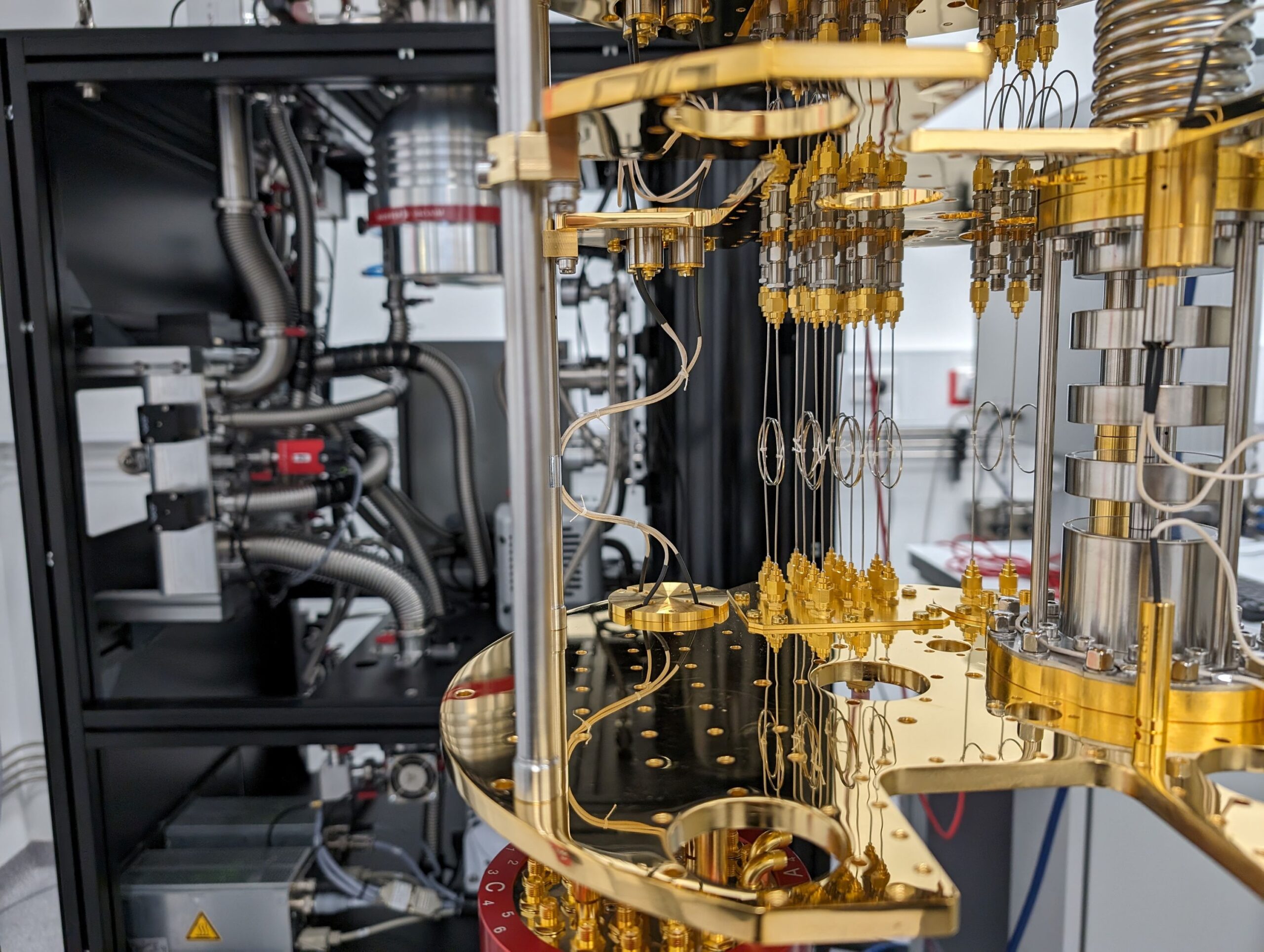
Quantum computers are only as useful as the instructions they are given. Developing algorithms that outperform their classical counterparts, and that work on near-term hardware is one of the central challenges in quantum computing today.
FLiQC’s algorithms research targets problems with direct relevance to Australian industry and national priorities. Our researchers develop and assess quantum approaches to optimisation, simulation, and machine learning, with applications spanning defence, transport, logistics, and scientific discovery. From quantum signal processing to quantum-walk-based algorithms for practical use cases, our work is focused on demonstrating real quantum advantage in areas that matter.
This project will explore the application of quantum machine learning, quantum optimisation, and quantum simulation to high-impact problems applicable to the defence sector.
A central goal of this research is to identify and develop quantum algorithms capable of delivering super-quadratic speedups over the best known classical approaches, whether for finding exact solutions or high-quality approximations. You will investigate novel algorithmic frameworks, conduct rigorous theoretical analysis, and assess the real-world feasibility of these methods for defence-relevant use cases.
This project explores the development and application of quantum algorithms to tackle complex optimisation problems and enhance signal processing tasks. By leveraging the unique properties of quantum systems, such as superposition, entanglement, and quantum interference, the project aims to achieve computational advantages over classical approaches. In quantum optimisation, we investigate quantum-enhanced methods for solving combinatorial and continuous optimisation problems relevant to logistics, finance, and engineering. In quantum signal processing, we design and analyse algorithms that enable efficient transformation, filtering, and analysis of signals using quantum circuits, with potential applications in enhanced medical imaging, advanced communication, and geophysical exploration.
This project focuses on developing and optimizing algorithms based on quantum walks, the quantum mechanical equivalent of classical random walks, to harness their unique properties like faster spreading, interference, and entanglement for practical computational advantages. By leveraging these features, the research aims to develop computationally superior methods for a variety of practical applications. This includes creating more efficient algorithms for complex graph analysis tasks like network optimization and community detection, enhancing search problems across large datasets, and enabling more accurate and efficient simulations of complex physical systems. Ultimately, this project seeks to translate the theoretical power of quantum walks into tangible, deployable solutions for real-world computational challenges on emerging quantum computing platforms.
Quantum computing is moving from isolated lab experiments to distributed, cloud-based, multi-tenant architectures. However, sharing quantum processing units (QPUs) or computing across quantum networks raises a central security question: how can we ensure the privacy and correctness of a computation when the parties involved, or the hardware providers themselves, may be untrusted or adversarial? Classical cryptography and secure multi-party computation provide well-established tools for computation in untrusted classical environments. Multi-tenant quantum systems, however, introduce additional physical and logical vulnerabilities. In the quantum setting, hardware effects such as crosstalk, weaknesses in low-level control systems, and manipulation of classical components used in Quantum Error Correction (QEC) create new attack surfaces.
This project develops theoretical computer science foundations for secure quantum computation in adversarial settings. Rather than focusing on hardware engineering, the research studies physical and logical vulnerabilities through computational and cryptographic models.
The PhD candidate can focus on one or more layers of the quantum computing stack. The main goal is to develop secure protocols and system models that ensure privacy and correctness when different parties do not trust one another. Possible directions range from abstractions of physical noise and adversarial error correction to secure high-level architectures such as Quantum Virtual Machines (QVMs). This work will help inform the design of secure infrastructure for future fault-tolerant quantum cloud systems
This project investigates a foundational question in quantum science: how macroscopic properties of many‑body systems can be identified using information produced by a quantum computer. While modern quantum algorithms can efficiently prepare simplified models of materials, far less is known about how to determine high‑level physical behaviours from these quantum states using feasible measurements.
The project focuses on formulating and analysing decision problems related to detecting macroscopic properties. Superconductivity will serve as an initial example, but the project is not tied to any particular physical system or technological application. The overarching aim is to better understand the measurement complexity of quantum systems at a conceptual level.
The PhD candidate will:
- develop idealised mathematical models of selected macroscopic phenomena,
- define quantum oracles for preparing relevant many‑body states,
- construct measurement or decision procedures suitable for a quantum‑algorithmic setting, and
- analyse the complexity of these procedures relative to classical approaches.
The project includes natural flexibility, allowing adjustments to focus more on theory, modelling, or algorithm design depending on the candidate’s interests and progression.
Capability Lead: A/Prof. Troy Lee, University of Technology Sydney
ARCHITECTURES
Even the most powerful quantum processor is fragile. Errors accumulate, qubits decohere, and the overhead required to correct mistakes at scale remains one of the defining barriers to commercially useful quantum computing.
FLiQC’s architectures research addresses that barrier directly. Our researchers are developing new approaches to fault-tolerant quantum computer design, seeking to reduce the qubit and time overheads that currently make large-scale quantum computation so demanding. This work sits at the interface between theory and engineering, and its progress is essential to closing the gap between today’s quantum prototypes and tomorrow’s quantum industry.
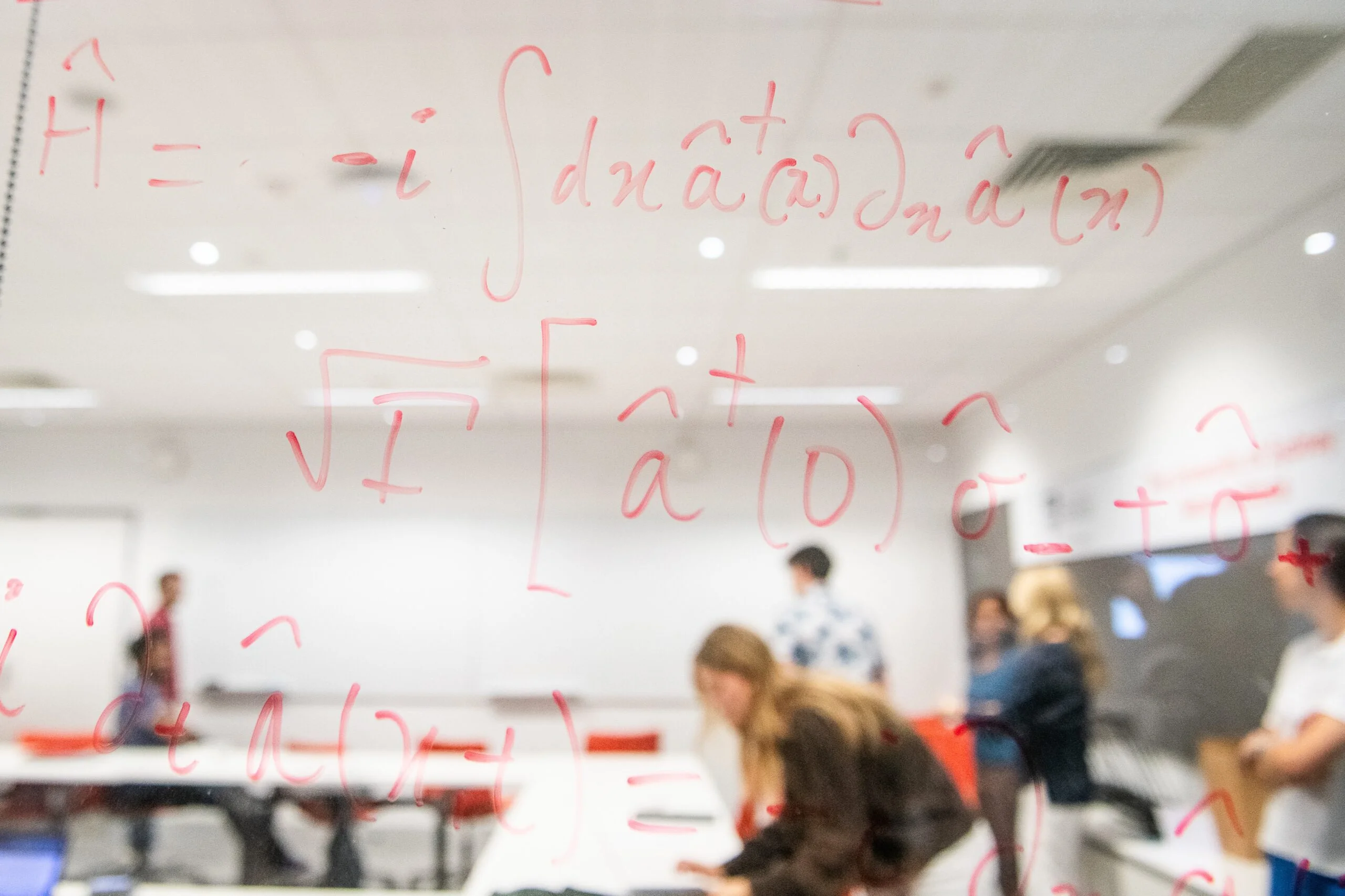
Quantum error-correcting codes are static objects from which fault tolerant protocols can be derived. The implementation of a fault tolerant protocol depends on numerous factors, the most important being the physical architecture that will be used. Fusion-based quantum computing (FBQC) with a photonic physical architecture provides a large degree of flexibility in designing fault tolerant protocols. In this project we will study different aspects of fault tolerant protocols in FBQC, including making use of a new generation of quantum error-correcting codes
Interference is a defining feature of quantum mechanics and an important resource in quantum information technologies. Boson sampling, for example, hinges on the fact that interferometers natively sample probability distributions given by the symmetric representation of the unitary group, which in turn is given by computationally ‘hard’ matrix permanents. This opens a wide array of interesting mathematical connections between representation theory, combinatorics, and universality in quantum scattering problems. In this PhD project we will explore these connections and their implications for quantum information and computation. A key question is whether these generalisations might be practically useful beyond demonstrating computational ‘supremacy’.
Capability Lead: Prof. Andrew Doherty, University of Sydney
DEVICES
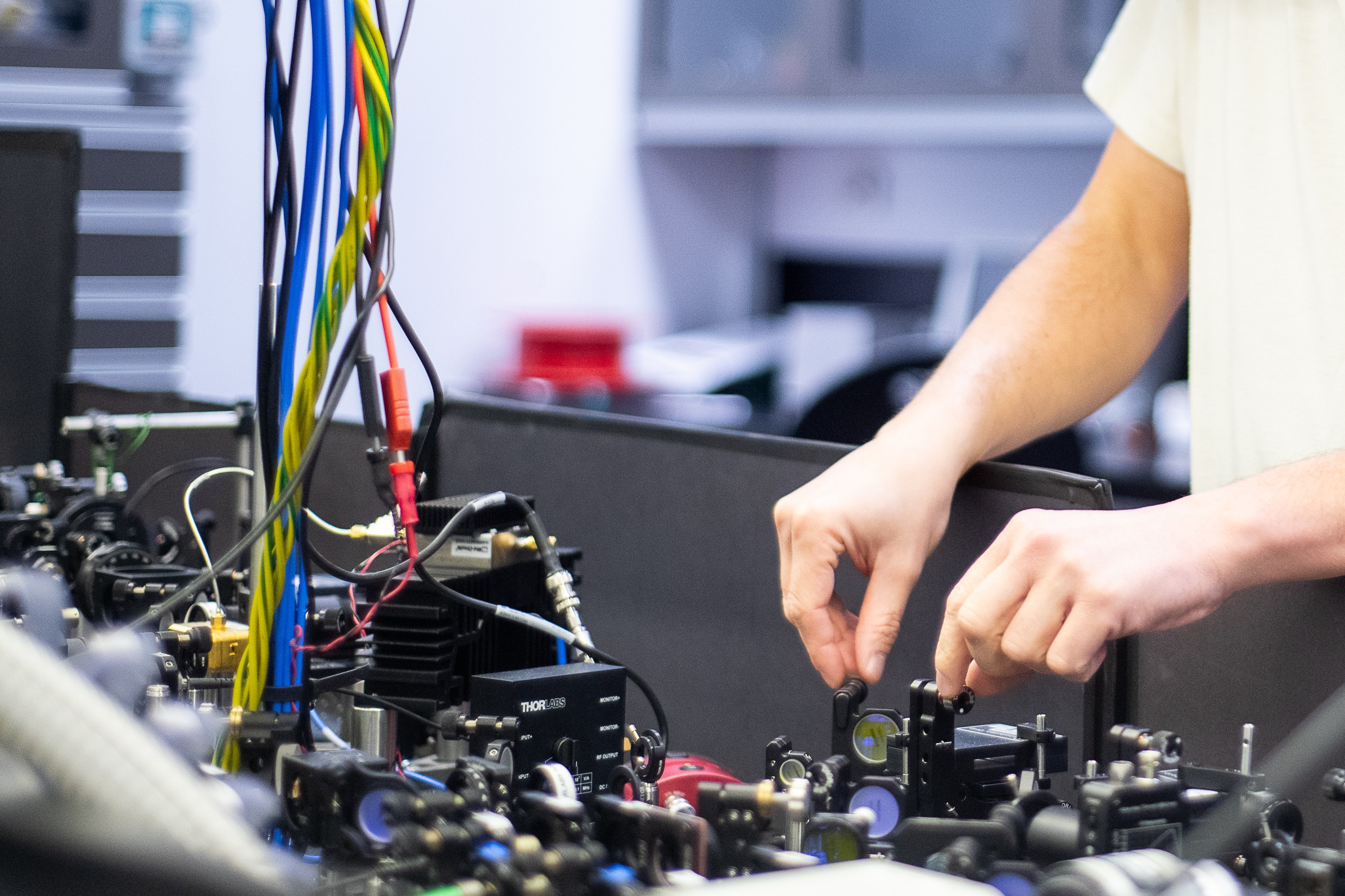
Every quantum computer begins with a qubit. Building qubits that are stable, fast, and scalable, and the control systems needed to operate them precisely, remains one of the most technically demanding frontiers in the field.
FLiQC’s devices research pursues multiple promising qubit technologies, including trapped-ion systems, superconducting circuits, and silicon-based spin qubits. Our researchers develop and test new qubit implementations and quantum control and readout schemes, working directly with industry partners to validate new approaches and accelerate the path to utility-scale quantum computing.
This project aims to innovate quantum control strategies to accelerate the large-scale utility of quantum computers. The focus is on enabling a new suite of quantum control that will significantly reduce the quantum hardware resources and allow low-error processing of quantum information. This will be achieved by developing advanced dynamical modulation techniques that incorporate light-atom Hamiltonian engineering, leveraging machine learning techniques and insights from atomic and optical physics.
Silicon MOS (SiMOS) spin qubit technology is a promising platform for quantum computing, due to its compatibility with standard foundry-level fabrication processes that allow the platform to leverage decades of innovation and extensive advancements made in global semiconductor foundries. Applications of quantum computers span many industries. These include cyber security, artificial intelligence, chemistry and pharmaceuticals. For quantum computers to be able to tackle these real-world problems, we need the technology to move beyond noisy intermediate scale quantum computers of today and into a regime of mature, fault tolerant and error corrected quantum computers spanning millions of high-fidelity qubits.
As the SiMOS platform matures into a robust candidate for fault tolerant quantum computing, the search for a scalable solution to readout and control for silicon spin qubits is becoming ever more important. Unlike classical digital computers, quantum computers require a dedicated readout mechanism to projectively measure the qubits. This project will utilise superconducting circuit technology (another very successful quantum technology platform) to realise such a scalable spin qubit readout scheme. In particular, the project will explore novel superconducting amplifier and resonator designs that can be applied to microwave/radiofrequency spin qubit detection techniques to achieve fast and high-fidelity spin qubit readout.
All modern silicon chips use both negatively charged electrons and positively charged holes to operate. This CMOS technology is critical to low power silicon chips. However silicon holes are very different to electrons – they have much richer spin physics due the strong intrinsic spin orbit interaction. This has led to tremendous recent interest in the use of silicon holes for spin and superconducting quantum information applications.
The aim of this proposal is work with Australian company Diraq to study silicon chips that exploit the high speed of hole spin qubits and the long coherence times of electron spin qubits to deliver fast, highly coherent silicon qubit architectures.
Devices for this project will be fabricated at the ANFF-UNSW clean-rooms, as well as in industry foundry facilities. Measurements will be performed using helium-3 cryostats and dilution refrigerators at the University of New South Wales. Theoretical support will be provided by collaborators at UNSW and the USA. Regular meetings with collaborators will underpin the project. See www.phys.unsw.edu.au/qed for more information.
The project seeks to develop a quantum computer device where the nuclear spin of a donor atom in silicon is integrated with a gate-defined quantum dot. This type of device will represent the unit cell of a scalable quantum processor, which combines the exceptional coherence and gate fidelity of nuclear spins with the addressability and manufacturability of semiconductor quantum dots.
The ultimate objective is to build a fault-tolerant, error-corrected silicon quantum computer with local logical encoding in the nuclear spin of donor atoms, and electrons in quantum dots providing medium-range interactions between logical qubits. The project will be conducted in partnership with Diraq Pty. Ltd., which is developing scalable quantum dot devices in silicon.
Capability Lead: Dr. Maja Cassidy, University of New South Wales
Research Training
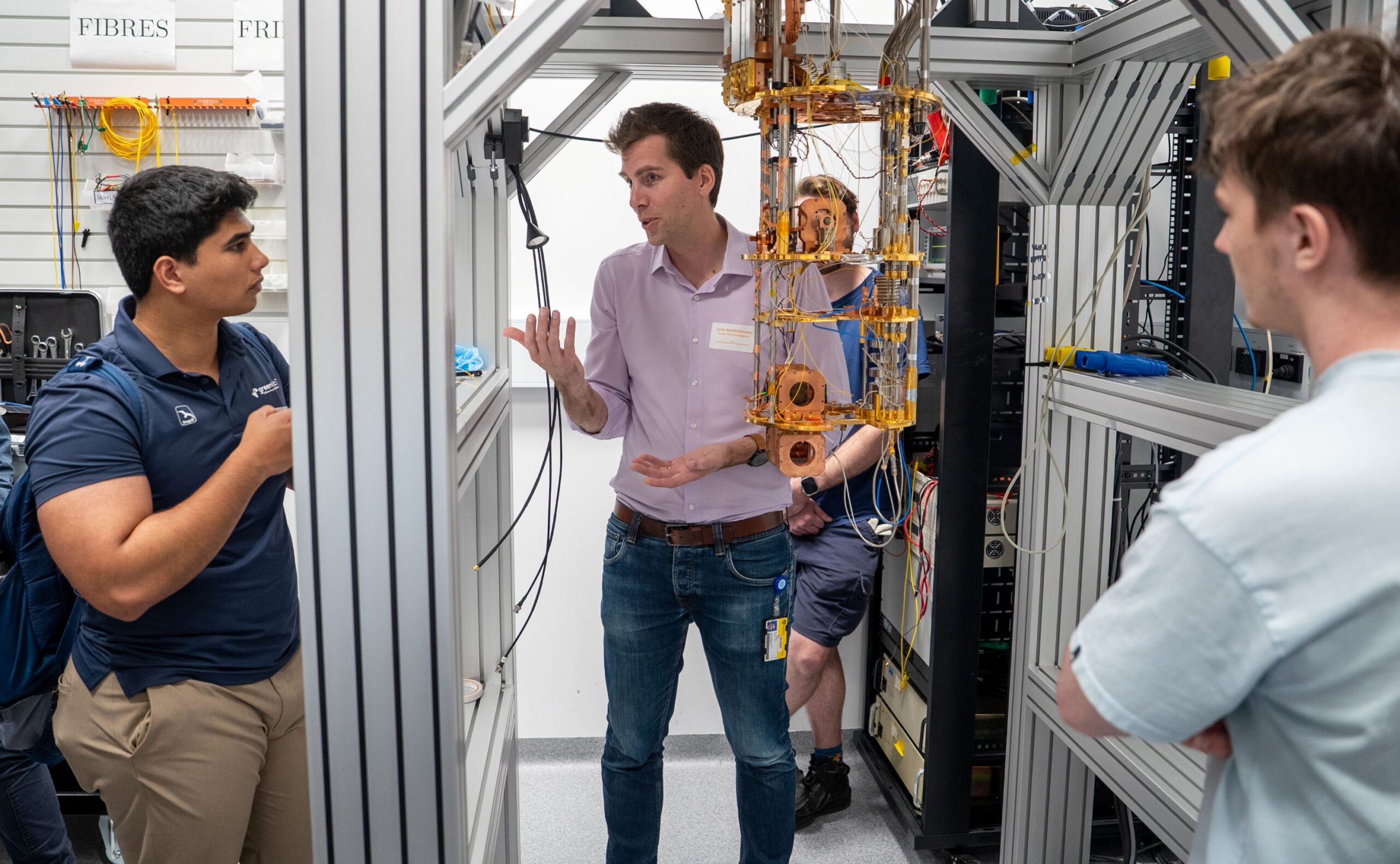
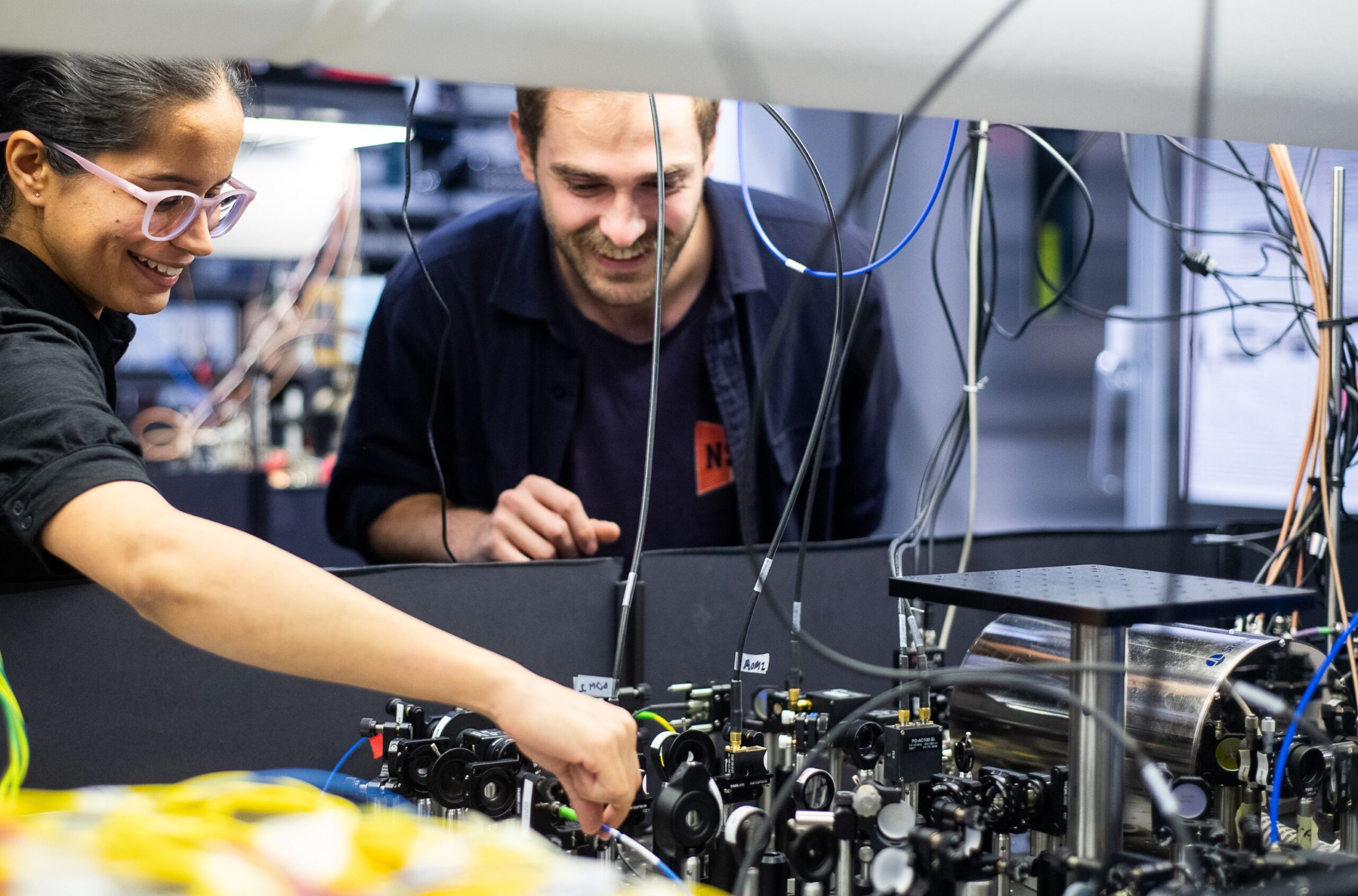
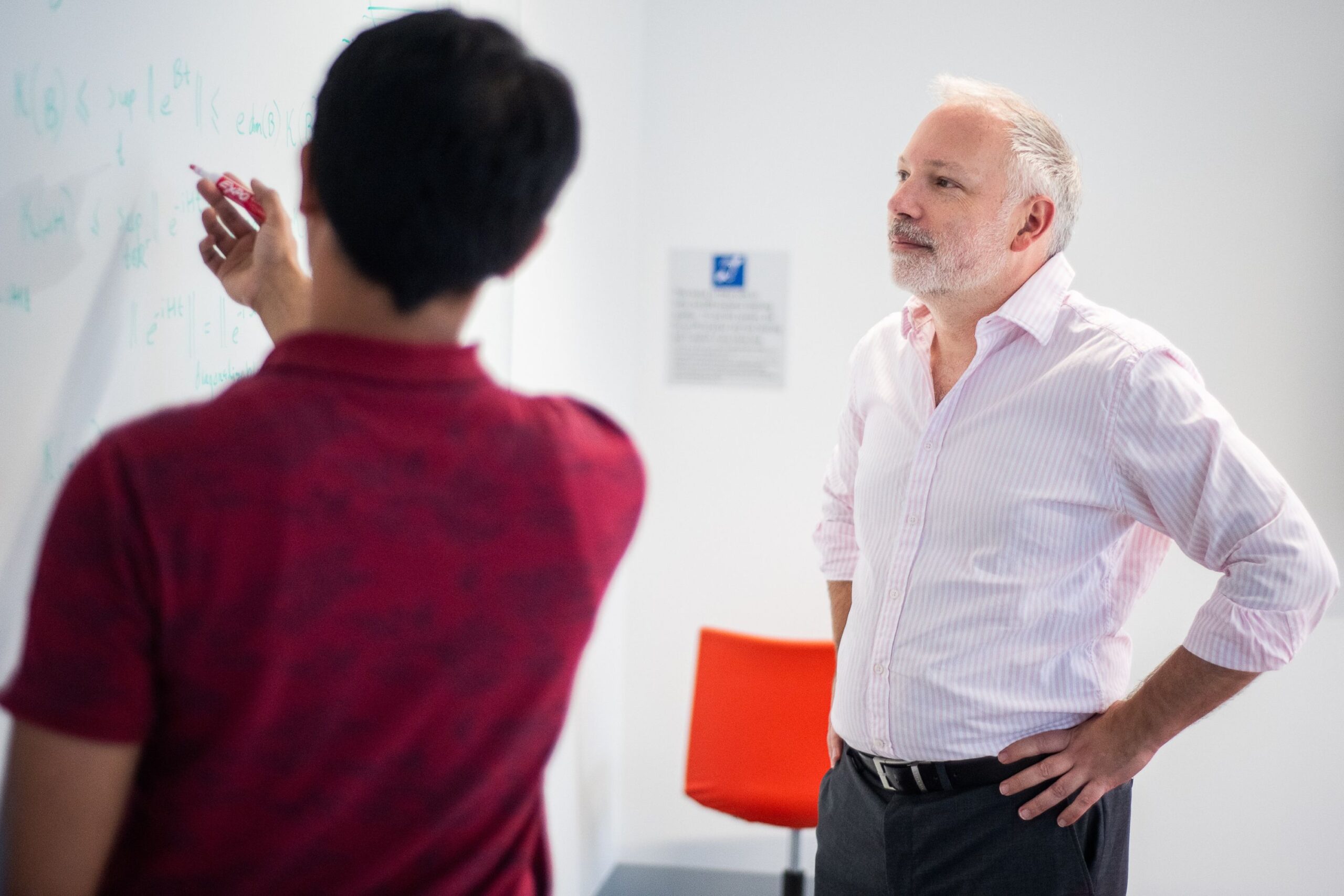
PhD candidates work within multidisciplinary project teams, gain hands-on experience with cutting-edge quantum hardware and simulation tools, and benefit from co-supervision by both academic and industry experts.
Graduates will leave FLiQC with deep technical expertise, a demonstrated research track record, and the practical skills to contribute immediately in academic, industry, or government settings.